Friday, October 29, 2010

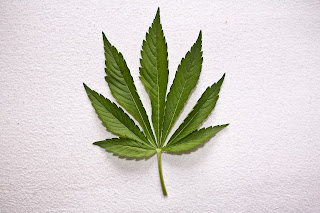
Proposition 19: either legalise cannabis or ban alcohol

2 November 2010 California votes on a proposition to legalise marijuana en make various activities linked to the growing and selling of marijuana a legal, controllable and taxable undertaking.

As usual, anything to do with drugs becomes a controversial subject, especially in the US. Proposition 19 is no exception. The nay sayers think it will be the end of civilised society when proposition 19 is approved. Ay sayers think it will pull the rug from under a lot of illegal activities.

I live in the Netherlands, where marijuana is, if not exactly legal under all circumstances, tolerated by the authorities and it can be legally purchased for personal use. So my view on this whole thing is rather liberal. As a matter of fact I see no difference between alcohol or cannabis. One of the arguments of the nay sayers is: "What if your doctor or nurse is high?" Yes, well, what if he or she is drunk? Another argument against prop 19 is that it would lead inevitably to addiction to hard drugs. This is nonsense. Marijuana is less addictive than alcohol. The only reason people who smoke marijuana can become addicted to hard drugs is that the only place they can get marijuana now also happens to be the place that sells the hard stuff because it is both illegal. Pulling marijuana out of the illegal circuit may lead to less addictions to hard drugs in the long run.

In the Netherlands both alcohol and cannabis are freely available, although you need to find a specialist shop for the latter while alcohol is available in practically every food store. Do I see stoners lining the pavement? No. Do our doctors and nurses walk around with their heads in the clouds? No. Do we have substantially more people addicted to hard drugs here than in the U.S.? No. In other words, I think the arguments of the nay sayers are ludicrous. They also deny that the population of California are responsible adults who can think for themselves. Like alcohol, the usage of cannabis is down to a person's own responsibility. Drink driving kills people. Alcohol addiction wrecks families. Yet, the vast majority of people who drink alcohol do so in a responsible manner and know their limits. It will be the same with the use of cannabis when it becomes legal.

There is no valid reason to ban cannabis while at the same time allowing alcohol. Ban them both or don't ban either. And we all know what happens when you ban alcohol...

Wednesday, October 27, 2010

History and the war in Afghanistan: when will we learn

According to U.S. military and intelligence officials, drawing from the latest assessment of the war in Afghanistan, the military campaign to dislodge the Taliban has failed. This comes as no surprise: When was a war against guerilla's ever won?


Take a look at history, both recent and ancient. It is rife with examples of guerilla's outlasting the martial efforts of superpowers. So rife in fact that winning such a war has become statistically impossible. It seems that the US military are finally admitting that, again, the statistics are bolstered with a win for the home team.


Last week I read that schools in the UK are considering dropping history from the school syllabus. Way to go to prevent young people to learn from mistakes made in the past. Mistakes like trying to fight against those that are defending their homes and who know the lie of the land better than anyone and above all: feel they have nothing to lose. Way to go to waste more young lives in future wars that are doomed to have no other outcome than a withdrawal and leave a shattered people to pick up the pieces, both at home and abroad. A war like this leaves only losers.


When will military advisors, who brief powerful leaders, ever learn to read a bit of history before beating the drums of war? You can fly in as many bombs as you like, you can throw as many soldiers against the mountains or the jungles or the deserts as you like, the guerilla is going to charge, run and hide until you are blue in the face and when you run out of steam, they will still be at it. It's like mosquitos in summer, no matter how many you swat, every night that buzzing whine in your ear will return.


History is more than just knowing names and dates. History can be used to teach us something. We can take advantage of it to better ourselves. We learn as children that if we touch a burning stove it hurts. It seems however that as soon as we become part of a powerful nation's elite, we forget the ability to learn from past mistakes. Politics begin to dictate military decisions and we rush headlong into a situation where there is no escape from other than with a severely bloody nose. And we do it time and time again.


When will we ever learn not to squander young lives in hopeless wars? We send people into space and we set up Large Hadron Colliders for God's sake! We are smarter than that! The ultimate question is: When will we learn to use our brains to find other solutions to our problems than fighting wars?


The supreme art of war is to subdue the enemy without fighting. 
  - Sun Tzu

Friday, October 22, 2010

To watch Simon Cowell or not to watch Simon Cowell

Photo courtesy of
Rodolfo Belloli 

Google TV, Apple TV, Boxee and others are offering a way to watch Internet content on our living room TV's. I jumped on this bandwagon early on and cancelled my cable subscription some 3 years ago. But that may be a little radical for most people. No more live sports, no more reality TV and no more Idols-alikes. One person's boon is another person's bad dream.

For now, Internet-TV will be complementary to normal TV instead of a replacement for the majority of people. This may change as soon as the major players in the main stream TV world start dumping their - in my view - trash on the Internet. And that will happen. How could Simon Cowell resist being part of the largest network humanity has ever seen?

And yet, could it be that the mixing of the waters could bring forth a wondrous elixir? Could it be that due to the freedom which is - still - inherently part of the make up of the Internet, there is going to be room for content that caters to more than just the lowest common denominator?

Already there are shows that are commercially viable which buck the commercial trend. Look at the shows on Leo Laporte's Twit.tv network. They cater to a niche audience and they are commonly one and half or two hours long. Shows like that would never survive on regular commercial networks (indeed TechTV did not). Yet the shows make enough money for Leo Laporte to build a company on them.

The one important factor in all this is freedom. As long as the Internet remains free from government interference, as long as the large media companies do not take hold of the Internet wholesale, there will be a chance for 'traditional' and 'quirky' to live together.

I do not see overall Internet governance happen any time soon. If only because of the vast amount of hackers that will find loop holes in any regulatory technology governing bodies may throw into the fray. I foresee a bright future where Simon Cowell may be available on my living room TV but where I have enough alternatives to not have to watch his vitriolic, public scamming, mainstream bilge.

Wednesday, October 20, 2010

Android or Apple: open or not open, that's the question

(Photo by Milan6)
Steve Jobs and Andy Rubin (Android creator) have a bit of a tiff. The crux of the tiff is the openness of Android and the closedness of Apple's Os's. The mud is flying both ways. Steve Jobs pointed out that Android is so fragmented that in effect it is as much a closed system as Apple's OS's are. Meaning that only technically proficient users can make use of the open aspects of Android. Many Twitter voices said much the same when Rubin responded with a tweet that contained a line of cryptic install code. Most users will read that tweet with the words "Say what?" on their lips.

Steve Job's argument seems a little far fetched though even if it is effectively true. Android is in effect a closed system to all but die hard code monkeys but that is a side effect of its distribution strategy: everyone can and more importantly may add to it, distribute it and use it if they have the skill. In Apple's case the OS being closed is part of its basic underlying philosophy. The OS is closed to protect users from fiddling with the innards and messing up the works. No one is allowed to touch it apart from the hallowed hands of the Apple coders. Result: a stable and homogenous system. However to attack one another over this seems a little pointless. Customers are better informed than ever thanks to the Internet so in most cases potential buyers know what they let themselves in for. And in any case: both platforms offer enough functionality out of the box to please most customers, no fiddling required.

The big question is: do we want our platforms to be open? The iPod, iPad and iPhone are locked into the tightly controlled world of Apple apps. However there are a couple of hundred thousand apps to choose from. There is an app for most functions you might want to use an apple device for. In practice there are only a limited amount of apps one really uses. The fact that the platform is closed is not relevant to the user. My washing machine isn't an open platform but it performs its duty perfectly.

Android is an open platform. Anyone can program for it, anyone can put it on his or her hardware and any program can be written and changed by anyone and finally the apps can be distributed through any website the distributer wishes to use. The result is a platform that is indeed open but Steve Jobs does have a point: it has become so fragmented that it is almost impossible to talk about a platform anymore. Android runs the risk of becoming one of those platforms where certain programs only run on certain iterations of Android. Like its Linux forebears the text terminal and cryptic code typing to get things working are never far away. Yet it has the huge advantage of welcoming everyone with a little programming skill to try and code for it. Through democratic filtering by users the easily usable and most functional apps will float to the top and become standard elements of the Android OS.

In both cases the bottom line is: does a device perform the function its user wants it to perform. And for both platforms there are a lot of users who will feel right at home, whether the front door is wide open or whether it needs a key. So bury your hatchets guys, the world is big enough for both of you.

Friday, October 15, 2010

Desktop, laptop, handheld: a liberating tech evolution

I am old enough to call a Sinclair ZX81 my first computer. It was a small, flat, black slab of plastic with a membrane keyboard and a weird piggybacked block sticking out of its rear. This block was the memory extension that gave the 8bit computer a whopping memory capacity of 16Kb.

How things have changed. And they are about to change again: we're moving into the handheld age. Computers are becoming truly pocket-portable while remaining fully functional. Add screen agnostic connectivity and the work and play computing device can be carried in our pocket anywhere we go. The one remaining issue would be the input device. It is hard to keep a device truly portable and make it so that typing a 1500 word piece on it can be done comfortably. But I have no doubt that out of the box thinkers are already working on that. Input systems like Swype are an indication of that.

Processor speed is also lagging a little still. But remember the early laptops? They were hardly more than a pocket calculator in a barely portable box with a screen the size of a postage stamp and a whopping big battery. Not anymore, they are sleek and run as fast and as smoothly as all but the fastest desktop monsters. Monsters that only 1% of the population really needs anyway. Already 1GHz snapdragon processors are the norm in smart phones. Multi cores are coming and so are GHz bumps. Count on it: within 5 years a handheld computer is as fast as the average laptop is now.

What will this enable us to do? Will it change our world?

You bet it will. Where laptops and desktop computers are still something of a special item which the average person has to switch on with a degree of conscious choice, the handheld device, i.e. mobile phone, is switched on and used almost without thinking about it. It is much more an extension of our body.

Also: for the average person buying a desktop or laptop computer is a once in a couple of years occurrence. Again a much more conscious decision. Mobile phones are replaced much more often and easier, especially when contracts are involved. This is going to become even more noticeable when the cheaper strata of the mobile phone market becomes populated with smart phone like devices. Something that is already happening. The 'trow away' or 'burner' phone will become powerful enough to do much more than just call and SMS.

The phone is with us at all times and it has penetrated every demographic layer of the populace. These devices becoming more powerful will have a much greater impact than making the desktop or laptop computer more powerful.

Mobile phones, excuse me, handheld super-computers, will detach us from wires attached to walls, wires that keep us in our seats all day. Where the smart phone is still an 'also have' device the handheld computer will become the only computing device we need, freeing us from our desks at the same time.

My latest book!